A Strategic Guide to Cost Management for Higher Profitability
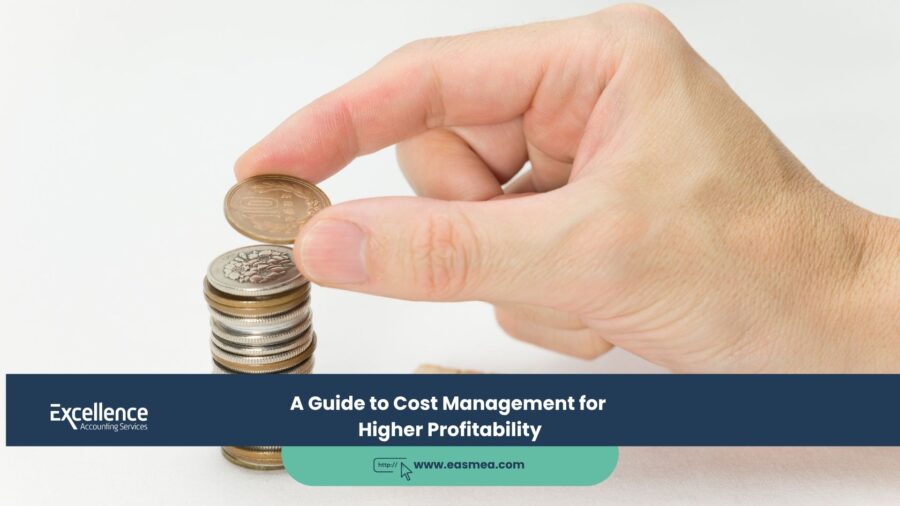
In the relentless pursuit of business growth, the spotlight often shines brightest on the top line: increasing sales, acquiring new customers, and expanding market share. While revenue growth is undeniably vital, it only tells half of the story. The true measure of a company’s health and sustainability lies in its profitability—the bottom line. And the most direct path to improving profitability is through a disciplined, strategic, and continuous focus on cost management. Many business leaders equate cost management with reactive, often painful, cost-cutting. This is a critical misunderstanding. True cost management is not about slashing budgets indiscriminately; it’s a proactive and strategic discipline focused on optimizing every dirham spent to maximize value and eliminate waste.
- A Strategic Guide to Cost Management for Higher Profitability
- Part 1: The Critical Mindset Shift: Cost Cutting vs. Cost Optimization
- Part 2: Understanding Your Cost Structure
- Part 3: A 5-Step Framework for Strategic Cost Management
- Part 4: The Technology Enabler
- Your Partner in Profitability: Strategic Cost Management with EAS
- Frequently Asked Questions (FAQs) on Cost Management
- Ready to Transform Your Bottom Line?
Effective cost management is the engine of operational excellence. It creates a resilient business that can weather economic downturns, a lean organization that can outmaneuver competitors, and a financially robust company that can invest confidently in future growth. It transforms the finance function from a historical scorekeeper into a strategic co-pilot, guiding every department toward a culture of efficiency and value creation. This guide will provide a comprehensive framework for leaders to move beyond simple cost-cutting and embrace a holistic approach to cost management. We will explore the mindset, strategies, and tools necessary to build a cost-conscious culture that drives not just savings, but sustainable, long-term profitability.
Key Takeaways on Strategic Cost Management
- Optimization, Not Just Cutting: The goal is to spend smarter, not just spend less. Focus on eliminating waste and maximizing the value of every expense.
- Visibility is the First Step: You cannot manage what you cannot see. Accurate, detailed, and timely tracking of all costs is the non-negotiable foundation.
- It’s a Cultural Shift: Effective cost management is not a one-time project for the finance team; it’s a continuous process that must be embedded in the culture and embraced by every employee.
- Budgeting is a Strategic Tool: Move beyond static annual budgets to dynamic forecasting and a “living” budget that guides real-time decision-making.
- Technology is a Key Enabler: Modern accounting and analytics tools are essential for providing the real-time data and insights needed to manage costs effectively.
- Every Cost is an Investment: Scrutinize each expense through the lens of ROI. Does this spending contribute to revenue, efficiency, or strategic goals?
Part 1: The Critical Mindset Shift: Cost Cutting vs. Cost Optimization
The language we use matters. The term “cost-cutting” often invokes a negative, short-term mindset focused on survival. “Cost optimization,” on the other hand, implies a positive, long-term strategy focused on thriving. Understanding this distinction is the first step toward building a sustainable cost management program.
| Dimension | Cost Cutting (The Reactive Approach) | Cost Optimization (The Strategic Approach) |
|---|---|---|
| Focus | Reducing expenses quickly, often across the board. | Improving business value, efficiency, and performance. |
| Timeline | Short-term, often in response to a crisis. | Continuous, proactive, and integrated into long-term strategy. |
| Impact | Can negatively impact quality, morale, and customer experience. | Aims to enhance quality and customer value by eliminating waste. |
| Example | Implementing a company-wide travel ban or hiring freeze. | Analyzing travel data to negotiate better corporate rates with preferred airlines. |
| Mindset | “How can we spend less?” | “How can we get more value from what we spend?” |
While short-term cost-cutting may sometimes be necessary, a business that relies on it as its primary strategy is in a perpetual state of crisis. Sustainable profitability comes from a culture of cost optimization.
Part 2: Understanding Your Cost Structure
Before you can manage costs, you must understand their nature. All business expenses fall into three broad categories, and the mix of these categories defines your company’s operating leverage and risk profile.
1. Fixed Costs
These are expenses that do not change regardless of the level of business activity. They are the baseline costs of keeping the doors open. Examples include office rent, fixed salaries of administrative staff, insurance premiums, and annual software subscriptions.
2. Variable Costs
These costs are directly tied to your level of production or sales. As your business activity increases, these costs increase proportionally. Examples include raw materials for a manufacturer, cost of goods sold for a retailer, and sales commissions.
3. Semi-Variable Costs (or Mixed Costs)
These costs have both a fixed and a variable component. A classic example is a utility bill, which may have a fixed monthly connection fee plus a variable charge based on consumption. Another is a salesperson’s salary, which might include a fixed base salary plus a variable commission.
A business with high fixed costs has high operating leverage; a small increase in sales can lead to a large increase in profit, but it is also more vulnerable during downturns. A business with high variable costs has lower risk but may have lower profit margins. A key goal of cost management is to understand and, where possible, optimize this mix.
Part 3: A 5-Step Framework for Strategic Cost Management
A systematic approach is essential for long-term success. This five-step framework provides a continuous cycle for identifying, implementing, and monitoring cost optimization initiatives.
Step 1: Achieve Total Cost Visibility
This is the foundation. You need a detailed, accurate, and timely understanding of where every dirham is going. This requires a well-structured Chart of Accounts and disciplined bookkeeping. Your goal is to move from broad categories like “Marketing Expenses” to granular sub-categories like “Digital Advertising – Google,” “Social Media Content,” and “Trade Show Exhibitions.”
Step 2: Develop a Strategic Budget and Forecast
The budget should not be a once-a-year document that sits on a shelf. It should be a strategic plan expressed in numbers. This involves:
- Zero-Based Budgeting (ZBB): Instead of just adding a percentage to last year’s budget, ZBB requires every department to justify every expense from a baseline of zero. This forces a critical evaluation of all spending.
- Rolling Forecasts: Supplement the annual budget with a rolling 12-month forecast that is updated monthly or quarterly. This makes the financial plan a dynamic tool for managing the business in real-time.
Step 3: Implement Targeted Cost Optimization Initiatives
With clear visibility and a strategic budget, you can now target specific areas for optimization:
- Procurement and Supplier Management: Are you getting the best prices? Systematically review your top suppliers. Consolidate purchasing to gain volume discounts. Re-negotiate contracts regularly. Implement a formal purchase order process to control rogue spending.
- Process Re-engineering: Map out key business processes (e.g., from sales order to cash collection). Where are the bottlenecks, redundancies, and manual steps? A core goal of our business consultancy is to identify and eliminate these inefficiencies.
- Overhead Rationalization: Scrutinize your fixed costs. Are you paying for software licenses you don’t use? Can you negotiate better terms on your office lease? Are your utility bills optimized?
- Inventory Management: For product-based businesses, inventory is a huge cost. Implement a just-in-time (JIT) system where possible. Analyze sales data to eliminate slow-moving or obsolete stock.
Step 4: Foster a Cost-Conscious Culture
This is perhaps the most critical and challenging step. Cost management must be everyone’s responsibility.
- Communicate the “Why”: Explain to employees how cost savings translate into business stability, investment in growth, and even performance bonuses.
- Empower and Incentivize: Give department heads ownership of their budgets. Create incentive programs that reward employees for innovative cost-saving ideas.
- Lead by Example: The leadership team must demonstrate a commitment to smart spending in their own actions.
Step 5: Monitor, Measure, and Report
What gets measured gets managed. You need a system for tracking progress against your goals.
- Variance Analysis: Regularly compare your actual spending against your budget and investigate significant variances.
- KPI Dashboards: Create simple, visual dashboards that track key cost metrics (e.g., Cost per Unit, Overhead as a % of Revenue) and make them visible to relevant teams.
Part 4: The Technology Enabler
Trying to manage costs on outdated software or manual spreadsheets is like trying to navigate a supertanker with a rowboat paddle. Modern technology is the essential enabler of strategic cost management.
A cloud accounting platform like Zoho Books is the central nervous system for your cost management framework. It provides:
- Real-Time Visibility: Dashboards provide an up-to-the-minute view of expenses, allowing you to spot budget overruns as they happen, not a month later.
- Granular Tracking: Use expense categories and tags to track spending by department, project, or location, providing the detailed data needed for analysis.
- Budgeting Tools: Set budgets directly in the system and automatically track performance against them.
- Purchase Order Control: Implement a digital approval workflow for purchases, ensuring that all significant spending is pre-approved and aligned with the budget.
Your Partner in Profitability: Strategic Cost Management with EAS
Implementing a robust cost management framework requires expertise and resources that many SMEs lack in-house. Excellence Accounting Services (EAS) acts as your strategic partner, providing the tools, expertise, and insights to drive higher profitability.
- Outsourced CFO Services: Our Virtual CFOs work with you to develop strategic budgets, create KPI dashboards, analyze cost structures, and lead your business through a systematic cost optimization program.
- Accounting & Bookkeeping: We provide the foundational visibility you need with accurate, timely, and detailed bookkeeping, ensuring your cost data is reliable and actionable.
- Payroll Services: We help you manage one of your largest costs—your payroll—efficiently and compliantly, freeing up your HR and finance teams through our payroll services.
- Feasibility Studies: Before you invest in a new project or expansion, our feasibility studies provide a rigorous analysis of the expected costs and profitability, ensuring smart investment decisions.
- Internal Audit: Our internal audit services can review your procurement and expense management processes to identify control weaknesses and opportunities for cost savings.
Frequently Asked Questions (FAQs) on Cost Management
The absolute first step is to achieve visibility. You must ensure you have an accurate and detailed breakdown of all your expenses for the last 6-12 months. This means getting your bookkeeping in perfect order. This data is the map you will use for the entire journey.
A direct cost is an expense that can be directly traced to producing a specific product or service (e.g., the raw materials for a table). An indirect cost (or overhead) is a general business expense that cannot be tied to a specific product (e.g., the rent for the factory where the table is made).
This should be done on a monthly basis without fail. A formal monthly management meeting to review the budget variance report is a critical business discipline for effective cost management.
Not necessarily. While the total cost of leasing may be higher over time, it offers benefits like lower upfront cash outlay, predictable monthly payments, and no maintenance responsibilities. A lease vs. buy analysis should be done, considering factors like cash flow, tax implications, and the asset’s useful life.
Focus on productivity and efficiency. Implement better technology and automation to allow your team to achieve more. Review overtime policies. Consider flexible staffing models or outsourcing non-core functions. Invest in training to improve employee skills and output.
ABC is a more advanced method of allocating indirect costs (overheads). Instead of using a simple method (like allocating rent based on square footage), it allocates costs based on the specific activities that drive them. It gives a much more accurate picture of the true profitability of different products or customers.
Make it part of their job and incentivize it. Set departmental budgets and make managers accountable. Create a formal “suggestion box” program for cost-saving ideas and offer financial rewards (e.g., a percentage of the first year’s savings) for implemented ideas.
Both. Apply the “Pareto Principle” (80/20 rule) to identify your top 5-10 expense categories and focus significant strategic effort there. At the same time, foster a culture where everyone looks for small, incremental savings, as these can add up to a significant amount over time.
Dramatically. A company with higher, more consistent profit margins and a lean, efficient cost structure is less risky and more attractive to potential buyers or investors. Strong cost control directly increases EBITDA (Earnings Before Interest, Taxes, Depreciation, and Amortization), which is a key multiple used in business valuation.
The most common mistake is treating it as a one-time, panic-driven project. They slash costs during a downturn and then let them creep back up when times are good. The most successful companies treat cost optimization as a continuous, everyday discipline, regardless of the economic climate.
Conclusion: Building a Lean, Profitable, and Resilient Enterprise
Cost management is the unsung hero of corporate strategy. While revenue growth creates opportunities, disciplined cost management is what creates the resilience and profitability to seize them. By shifting from a reactive cost-cutting mindset to a proactive culture of cost optimization, business leaders can unlock enormous value. This transformation builds a leaner, more agile organization that is not only more profitable in the short term but also fundamentally stronger, more competitive, and better prepared for the challenges and opportunities of the future.