
Managing Business Debt Strategically in the UAE: A Guide to Sustainable Growth
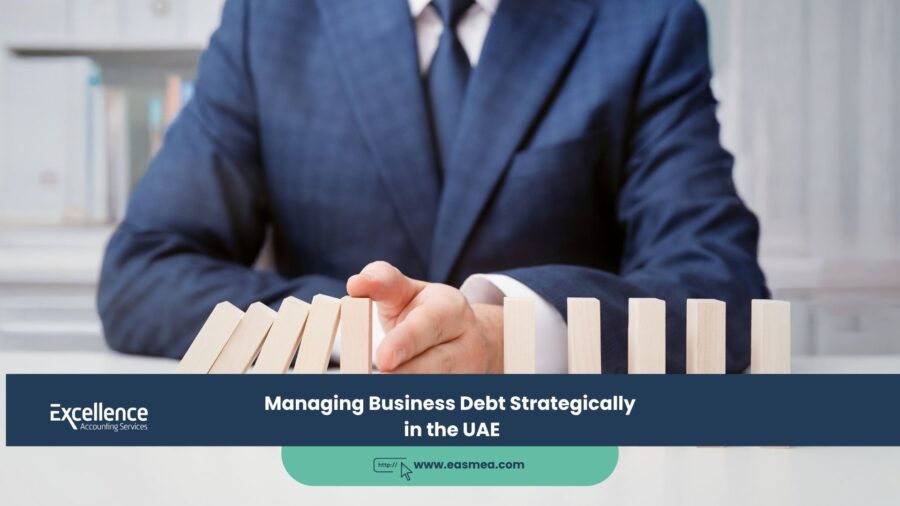
In the vocabulary of business, “debt” is one of the most loaded words. For some, it conjures images of risk, constraint, and financial distress. For others, it represents opportunity, leverage, and accelerated growth. The truth is that debt is neither inherently good nor bad; it is a powerful tool. Like any tool, its impact depends entirely on the skill and strategy of the person wielding it. In the fast-paced, ambitious economic landscape of the UAE, knowing when and how to use debt strategically is not just a financial skill—it is a critical determinant of long-term success.
- Managing Business Debt Strategically in the UAE: A Guide to Sustainable Growth
- Part 1: The Philosophy of Debt - Good Debt vs. Bad Debt
- Part 2: Before You Borrow - Assessing Your Debt Capacity
- Part 3: The Strategic Debt Management Plan
- Part 4: The Role of Technology in Smart Debt Management
- Your Strategic Partner in Financial Management: How EAS Can Help
- Frequently Asked Questions (FAQs) on Business Debt
- Is Your Debt Fuelling Growth or Draining Cash?
A business that avoids debt entirely may grow, but it will grow slowly, constrained by its own organic cash flow. A business that takes on debt recklessly, without a clear plan for repayment or a tangible return on investment, is setting itself on a path to a potential cash flow crisis. The most successful businesses occupy the strategic middle ground. They view debt as a calculated investment. They borrow with a clear purpose, manage their obligations with discipline, and maintain a healthy balance between leverage and risk. This guide is a roadmap for UAE business owners and leaders on how to manage debt strategically. We will explore the difference between “good” and “bad” debt, how to assess your company’s borrowing capacity, the key metrics lenders care about, and how to build a debt management plan that fuels, rather than fractures, your growth ambitions.
Key Takeaways on Strategic Debt Management
- Debt is a Tool, Not a Sign of Failure: When used correctly, debt is a powerful instrument to accelerate growth, acquire assets, and manage working capital.
- Distinguish “Good Debt” from “Bad Debt”: Good debt funds assets that generate more income than the cost of the debt. Bad debt funds operating losses or non-essential items, draining cash flow.
- Know Your Ratios: Lenders live and die by financial ratios. Understanding your Debt-to-Equity, Debt-to-Asset, and especially your Debt Service Coverage Ratio (DSCR) is non-negotiable.
- Cash Flow is King: Your ability to service debt (pay interest and principal) comes directly from your cash flow. A robust cash flow forecast is your most important debt management tool.
- Understand Debt Covenants: These are the rules of the loan agreement. Breaching them can have severe consequences, so they must be actively monitored.
- Expert Guidance is Crucial: Navigating debt negotiations and strategy often requires the expertise of a financial professional, like an Outsourced CFO, to level the playing field with lenders.
Part 1: The Philosophy of Debt – Good Debt vs. Bad Debt
The first step in strategic debt management is a philosophical one: learning to differentiate between debt that builds value and debt that destroys it.
Defining “Good Debt”
Good debt is any borrowing that is used to acquire an asset or fund an initiative that is expected to generate a return greater than the cost of the debt. It’s an investment in the future profitability and capacity of the business.
- Financing Productive Assets: A loan to buy a new piece of machinery that increases production capacity and efficiency.
- Funding Expansion: Debt used to open a new branch, enter a new market, or launch a new product line that has been validated by a thorough feasibility study.
- Managing Working Capital: A revolving line of credit used to purchase inventory to fulfill a large, profitable order.
Defining “Bad Debt”
Bad debt is borrowing used to cover fundamental weaknesses in the business model, fund non-essential expenditures, or when the terms are so unfavorable they cripple the business.
- Covering Operating Losses: Consistently borrowing to meet payroll or pay rent because the core business is unprofitable.
- Financing Non-Productive Assets: Taking a loan for an overly extravagant office fit-out that doesn’t contribute to revenue.
- High-Interest, Unstructured Debt: Relying on high-interest credit cards or personal loans to manage business cash flow, leading to a crippling interest burden.
| Example | Good Debt or Bad Debt? | Strategic Rationale |
|---|---|---|
| A loan to purchase a new delivery van | Good Debt | The van is a productive asset that enables the business to increase its sales and delivery capacity. |
| Using a credit card to pay employee salaries | Bad Debt | This indicates a severe cash flow problem. The high interest will only worsen the underlying issue. |
| A mortgage to buy the company’s own warehouse | Good Debt | It secures a key asset, controls long-term facility costs, and the property may appreciate in value. |
| A loan to fund a lavish “team-building” trip | Bad Debt | While team morale is important, this is a non-essential expense with no clear financial ROI. |
Part 2: Before You Borrow – Assessing Your Debt Capacity
Before you even approach a lender, you must act as your own toughest critic. Lenders will put your business under a financial microscope, so you need to understand what they will be looking for. This means getting intimately familiar with the key financial ratios that measure a company’s leverage and its ability to repay debt.
Key Ratio 1: Debt-to-Equity Ratio
- Formula: Total Liabilities / Shareholder’s Equity
- What it Measures: It compares the amount of capital provided by creditors to the amount provided by owners. A high ratio indicates that the company is heavily reliant on debt financing, which is seen as riskier. While industry standards vary, a ratio above 2.0 is often a cause for concern.
Key Ratio 2: Debt-to-Asset Ratio
- Formula: Total Debt / Total Assets
- What it Measures: This shows what percentage of the company’s assets are financed through debt. A ratio of 0.5 (or 50%) means that half of the company’s assets are funded by debt. Lenders use this to gauge the overall leverage of the business.
Key Ratio 3: Debt Service Coverage Ratio (DSCR) – The Most Important One
- Formula: Net Operating Income / (Principal + Interest Payments)
- What it Measures: This is the lender’s primary litmus test. It measures the company’s available cash flow to pay its current debt obligations.
- A DSCR of 1.0 means you have exactly enough cash flow to cover your debt payments.
- A DSCR of less than 1.0 means you do not have enough cash flow to make your payments—a massive red flag.
- Lenders typically want to see a DSCR of 1.25 or higher, which indicates a healthy cash flow cushion.
A core part of our CFO services is building a financial model that can project these ratios into the future, allowing you to stress-test your debt capacity before you borrow.
Part 3: The Strategic Debt Management Plan
Effective debt management is a continuous, proactive process, not a passive one. It requires a formal plan and disciplined execution.
1. Create a Formal Debt Strategy
Work with your financial advisor to create a document that outlines your company’s policy on debt. It should answer questions like: What are acceptable reasons for borrowing? What is our maximum target for the Debt-to-Equity ratio? What types of debt (e.g., term loans, lines of credit) are appropriate for our business model?
2. Actively Manage Your Debt Covenants
A debt covenant is a condition or rule that the borrower must adhere to as part of the loan agreement. Common covenants include maintaining a minimum DSCR, providing quarterly financial statements, or not taking on additional debt without permission. Breaching a covenant can trigger a default. A strategic plan includes a system for actively monitoring these covenants every month to ensure compliance.
3. Build a Robust Cash Flow Forecast
Your cash flow forecast is your early warning system. A rolling 13-week cash flow forecast, updated weekly, is a best practice. It allows you to anticipate future debt payments and ensure you have sufficient liquidity well in advance. This is a fundamental discipline we instill through our accounting and bookkeeping services.
4. Have a Debt Repayment Strategy
For businesses with multiple loans, a clear repayment strategy is essential. The two most common methods are:
- The Debt Avalanche: Prioritize paying off the loan with the highest interest rate first, while making minimum payments on others. This saves the most money over time.
- The Debt Snowball: Prioritize paying off the loan with the smallest balance first, while making minimum payments on others. This provides quick psychological wins and builds momentum.
The right strategy depends on your company’s financial situation and goals.
Part 4: The Role of Technology in Smart Debt Management
You cannot manage what you do not measure. Modern technology is essential for the level of financial discipline required for strategic debt management.
A cloud-based accounting system like Zoho Books is the foundational tool. It provides:
- Real-Time Financial Data: The ability to generate an accurate P&L and Balance Sheet at any time is necessary to calculate your key debt ratios.
- Loan and Amortization Tracking: The ability to properly record loans and automatically track the split between principal and interest payments.
- The Foundation for Forecasting: It provides the clean, organized historical data that is the starting point for building the all-important cash flow forecast. The clarity it provides is essential for high-quality financial reporting to lenders.
Your Strategic Partner in Financial Management: How EAS Can Help
Navigating the world of business debt requires expertise and strategic foresight. Excellence Accounting Services (EAS) provides the senior-level guidance your business needs to manage debt effectively.
- Outsourced CFO Services: Our CFOs develop your comprehensive debt strategy, build the financial models to assess capacity, and can even lead negotiations with banks on your behalf.
- Business Financing Assistance: We prepare the complete package that lenders require, including business plans, financial projections, and professional reports, to maximize your chances of securing favorable financing.
- Business Consultancy: We provide expert advice on optimizing your capital structure and ensuring your business operations can support your debt service obligations, a key aspect of our business consultancy.
- Due Diligence Services: When you are considering a major acquisition funded by debt, our due diligence services can help you assess the financial health of the target company.
Frequently Asked Questions (FAQs) on Business Debt
While it varies by industry, most commercial lenders in the UAE will look for a minimum DSCR of 1.25x. A ratio of 1.5x or higher is considered strong and will give you access to more favorable lending terms.
This is a significant risk that should be avoided if possible. A personal guarantee means the lender can seize your personal assets (like your home) if the business defaults. It’s often required for new businesses, but as your company matures, you should aim to secure financing based on the business’s assets and cash flow alone.
A term loan is a lump-sum amount that you borrow and repay over a fixed period with regular installments. It’s typically used for large, specific purchases like equipment or property. A line of credit is a flexible borrowing facility up to a certain limit that you can draw from and repay as needed. It’s best used for managing short-term working capital needs.
Under the new Corporate Tax law, interest expenses are generally deductible. However, there are “interest capping” rules that limit the amount of net interest expense you can deduct to 30% of your business’s EBITDA (Earnings Before Interest, Taxes, Depreciation, and Amortization). This is a complex area that requires professional tax advice from a firm with UAE Corporate Tax expertise.
Be proactive, not reactive. The moment you anticipate a problem, you should contact your lender. Open and honest communication is key. Prepare an updated financial forecast and a plan for how you will rectify the situation. Ignoring the problem is the worst possible course of action.
It can be a useful tool for businesses with long payment cycles, as it allows you to get cash immediately from your unpaid invoices. However, it can be expensive. It should be considered a short-term solution for managing working capital, not a long-term funding strategy.
Your debt position and key ratios should be a core part of your strategic monthly financial review. A formal, deep-dive review of your entire debt structure and strategy should be conducted at least annually.
A debt covenant is a condition or promise in your loan agreement. A “positive” covenant is something you must do (e.g., maintain a certain insurance policy). A “negative” covenant is something you must not do (e.g., sell a major asset without permission). Breaching a covenant is a form of default and can allow the lender to call the loan, so monitoring them is critical.
Yes. A comprehensive business plan with a well-researched market analysis and, most importantly, a credible and detailed financial projection can significantly strengthen your application. It shows the lender that you have a clear roadmap for the future and that you understand the financial dynamics of your own business.
A Limited Liability Company (LLC) or other corporate structure is generally seen as more credible by lenders. It separates the business’s finances from the owner’s personal finances, which lenders prefer. For a Sole Proprietorship, any business loan is effectively a personal loan to the owner, which often leads to higher scrutiny and a greater likelihood of requiring personal guarantees.
Conclusion: From Burden to Building Block
Strategic debt management is the art and science of transforming a potential liability into a powerful strategic asset. It demands a forward-looking perspective, a deep understanding of your company’s financial mechanics, and a disciplined approach to planning and monitoring. By moving beyond a fearful or reactive relationship with debt and adopting a proactive, strategic mindset, UAE businesses can unlock new avenues for growth, enhance their resilience, and build a more sustainable and profitable future. With the right strategy, debt ceases to be a burden and becomes a fundamental building block of your success.